Epoxy Grouting Singapore
Epoxy Grouting Service Singapore
JMJ Construction provides epoxy grouting services for tile joints in bathrooms, kitchens, floors and commercial spaces. Our service focuses on proper surface preparation, suitable grout application and a neat, durable finish.
Whatsapp Request a Quotation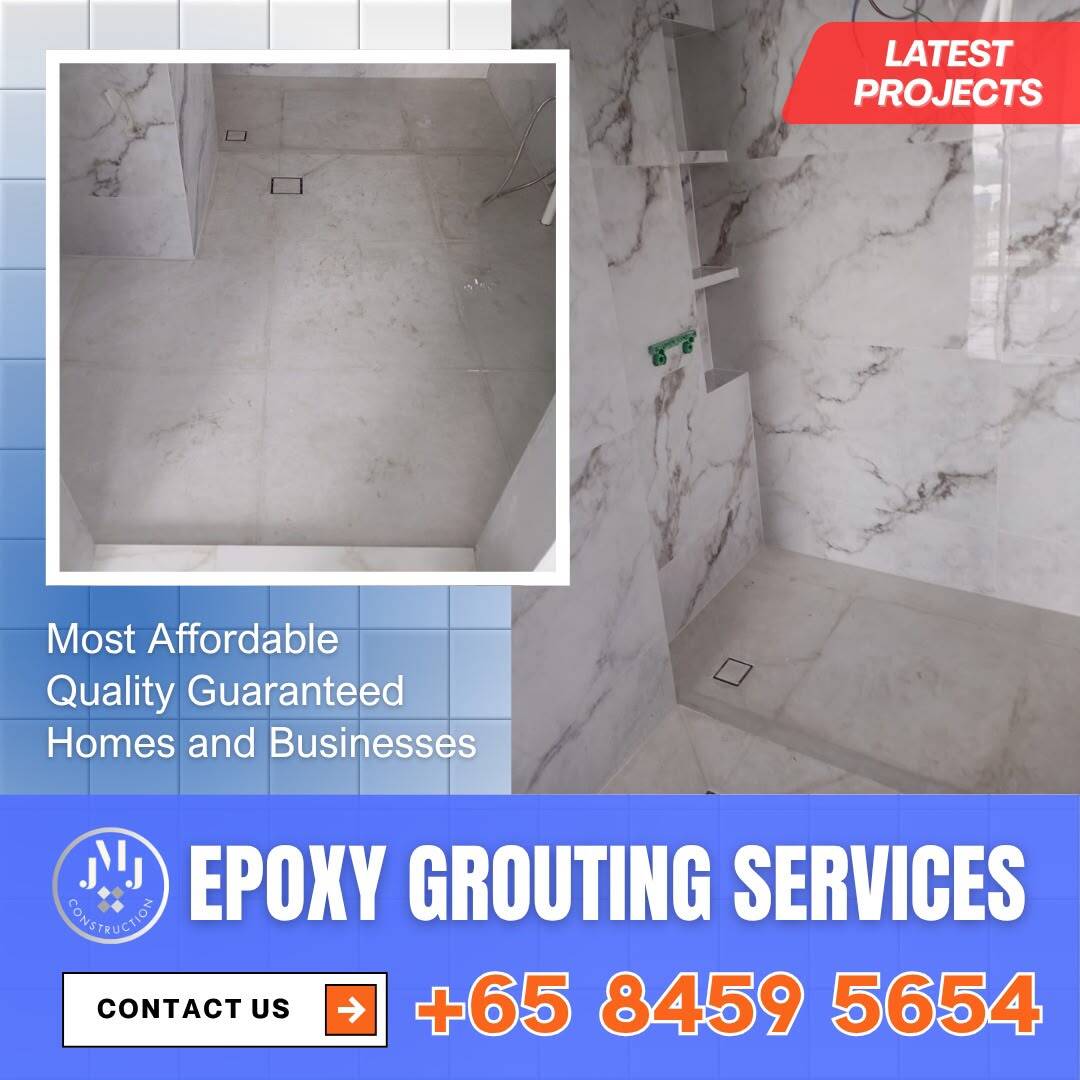
Epoxy Grouting Service Singapore - JMJ Construction
JMJ Construction provides professional Epoxy Grouting Services in Singapore for residential and commercial properties. Epoxy grout is a durable, water-resistant material used to fill tile joints, helping prevent stains, moisture penetration, and grout deterioration.
Our services include removing old grout, cleaning tile joints, applying high-quality epoxy grout, and ensuring a neat, smooth finish. Epoxy grouting is ideal for bathrooms, kitchens, floors, walls, and other tiled areas that require strong and long-lasting joint protection.
We Support 24/7 support to customer and response for epoxy grouting service query.
Phone : +65 8459 5654
WhatsApp : +65 8459 5654
JMJ Epoxy Grouting Services
Epoxy grout is a tile-joint filling material made with epoxy resin and a hardener, usually combined with fillers. Compared with conventional cement-based grout, suitable epoxy grout products generally offer better resistance to stains, chemicals and moisture. JMJ Construction helps customers select appropriate grouting solutions based on tile type, joint condition and the needs of each area.
Bathroom Epoxy Grouting
Suitable epoxy grout can help reduce staining and moisture penetration through tile joints. We assess bathroom joints and prepare the surface before applying the selected product.
Kitchen Epoxy Grouting
Epoxy grouting can help make kitchen tile joints easier to clean and more resistant to food stains and grease, depending on the product selected.
Floor & Wall Tile Grouting
We provide tile-joint grouting solutions for suitable residential and commercial floors and walls, according to the tile manufacturer's requirements.
Old Grout Removal
Where required, deteriorated grout is removed carefully before regrouting, helping create a suitable base for the new grout material.
Commercial Grouting
Epoxy grout may be suitable for selected commercial areas that need durable tile joints and regular cleaning, subject to product specifications.
Grout Repair & Replacement
We assess cracked, stained or damaged tile joints and recommend suitable repair or replacement work based on the condition of the existing installation.
Epoxy Grouting Process Step by Step
JMJ Construction follows a systematic workflow to help achieve clean tile joints and a professional finish. Actual methods depend on the grout product and site conditions.
Site Inspection
Inspect the tiled surface and identify damaged joints, stains, loose tiles and other conditions that may affect the grouting work.
Surface Preparation
Clean the work area and prepare the tile joints. The surface must meet the selected product's requirements for cleanliness and moisture condition.
Old Grout Removal
If regrouting is needed, remove sufficient existing grout from the joints using suitable tools without damaging the tile edges or substrate.
Grout Mixing
Mix the epoxy resin and hardener with the specified components in the correct proportions, following the manufacturer's instructions and working time.
Epoxy Grout Application
Apply the mixed grout into the tile joints using suitable tools. Fill the joints thoroughly and compact the material as required by the product.
Surface Cleaning
Remove excess grout and clean the tiles using the recommended method and cleaning materials before the product hardens.
Curing & Protection
Protect the grouted area from water, traffic and contamination for the period specified by the manufacturer.
Final Quality Inspection
Inspect the joints for consistent filling, clean tile surfaces and visible defects before handing over the completed work.
Advantages of Epoxy Grouting
When selected and installed correctly, epoxy grout offers several benefits for suitable tile installations.
Low Water Absorption
Epoxy grout generally absorbs less water than conventional cement-based grout, helping limit moisture penetration through the grout itself.
Stain Resistance
Suitable epoxy grout can resist many common stains from food, grease and everyday spills, making routine cleaning easier.
Durable Tile Joints
Properly installed epoxy grout can provide strong, durable joints for compatible tiles and installations.
Easier Cleaning
Its relatively non-porous surface can help reduce dirt and staining in grout joints and support regular cleaning routines.
Colour Options
Available colour choices can complement the tiles and create a consistent appearance across bathrooms, kitchens and floors.
Long-Term Maintenance
Its resistance to staining and wear can reduce some grout maintenance needs when the correct product and installation method are used.
Where Can Epoxy Grout Be Used?
The correct epoxy grout product should always be selected for the tile material, joint width and intended environment.
Residential Applications
- Bathroom floor and wall tiles
- Kitchen floors and splashbacks
- Laundry and utility areas
- Selected living room floor tiles
- Other compatible tiled surfaces
Commercial Applications
- Restaurants and food preparation areas
- Retail and office tiled floors
- Selected hospitality facilities
- Areas requiring frequent cleaning
- Other applications approved by the manufacturer
Why Choose JMJ Construction?
JMJ Construction aims to provide practical grouting solutions based on the condition of the tiled surface and the requirements of each project.
Careful Preparation
Proper preparation of existing joints and tiled surfaces helps support effective grout application.
Suitable Materials
We consider tile type, joint condition, application area and product requirements when planning the work.
Clean Finishing
Attention to grout application and timely cleaning helps achieve a neat and consistent finish.
Frequently Asked Questions
1. What is epoxy grouting?
Epoxy grouting uses a resin-based grout to fill joints between compatible tiles. It is known for low water absorption and resistance to many stains and chemicals.
2. Is epoxy grout suitable for bathrooms?
Yes, many epoxy grout products are suitable for bathroom tile joints. The product must be compatible with the tiles and intended wet-area application.
3. Can old cement grout be replaced?
In many cases, damaged cement grout can be removed and replaced with epoxy grout if the existing installation and joint dimensions are suitable.
4. Does epoxy grout make a tiled area waterproof?
No. Although epoxy grout has low water absorption, it does not replace a properly installed waterproofing system, sealed penetrations or movement joints.
5. How long does epoxy grout take to cure?
Curing and the time before water exposure or foot traffic depend on the product, temperature and site conditions. Follow the manufacturer's instructions.
Explore JMJ Construction Project Gallery
Explore JMJ Construction’s epoxy grouting project photos showcasing our tile grouting, bathroom and kitchen floor restoration, grout replacement, and professional finishing. Our work focuses on clean grout lines, durable results, and an improved appearance for residential and commercial spaces in Singapore.


Need Epoxy Grouting Services in Singapore?
Contact JMJ Construction for epoxy tile grouting, grout replacement, bathroom grouting, kitchen grouting and suitable commercial tile-joint applications. Request a quotation for your project.
Call Us WhatsApp UsServing customers in Singapore.


